
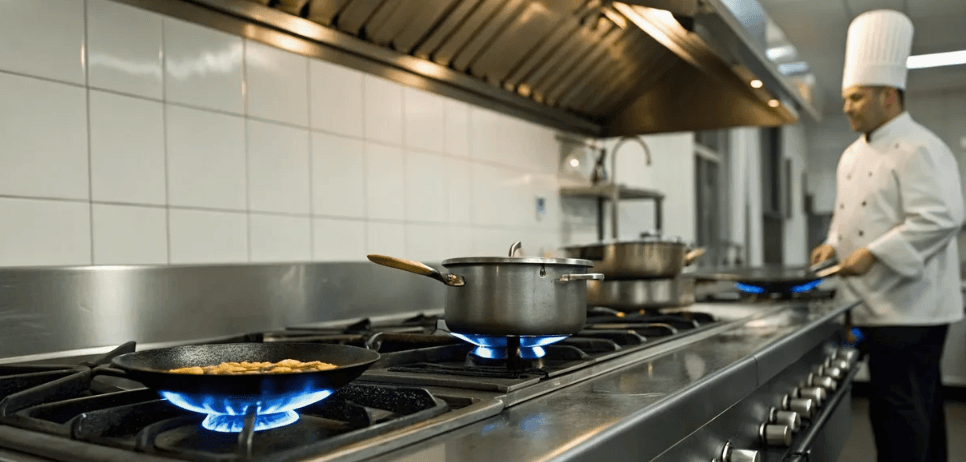
Professional kitchens depend on equipment that can support consistent preparation, efficient workflows, and appropriate food-safety practices. When a kitchen regularly prepares whipped cream and other aerated culinary products, selecting compatible equipment and understanding its capacity becomes especially important.
Larger-capacity containers can be useful in settings where preparation is frequent, but capacity should never be the only factor considered. Compatibility, storage, handling, dispenser specifications, and staff training all contribute to a successful setup.
Understanding these considerations allows restaurants, cafés, bakeries, catering businesses, and experienced home users to make more informed decisions about culinary equipment.
Why Capacity Matters
The capacity of a pressurized culinary container determines how much product it can hold. For a busy kitchen, a larger format may reduce the frequency with which staff need to replace components during normal preparation.
However, a larger capacity does not automatically mean that a product is suitable for every application. The dispenser and other connected equipment must be designed for the specific format being used.
For example, when evaluating a 2000g nitrous oxide product for culinary purposes, users should first confirm the manufacturer’s compatibility and operating requirements. Product specifications should always be checked before use.
Matching Equipment to Kitchen Workflows
Every kitchen has different preparation requirements. A small café may have a relatively predictable dessert menu, while a large bakery or catering operation may prepare significantly greater quantities throughout the day.
Before selecting equipment, it is useful to consider:
- Frequency of preparation
- Expected workload
- Compatible dispenser specifications
- Available storage space
- Cleaning requirements
- Staff familiarity with the equipment
- Manufacturer recommendations
This type of planning can help prevent equipment from becoming either unnecessarily large or unsuitable for the kitchen’s actual needs.
The Role of Compatible Dispensers
A pressurized culinary container should not be considered a standalone product. Its intended use depends on compatible equipment and proper operating procedures.
The dispenser should be designed to work with the specific charger or cylinder format. Users should check the manufacturer’s documentation for information about connection requirements, capacity limits, and operating procedures.
Attempting to adapt equipment or use incompatible components can create unnecessary safety risks. Professional kitchens should therefore establish clear equipment specifications and ensure that staff understand them.
Culinary Applications
In legitimate food preparation, aerated cream is commonly used for desserts and beverages. Whipped cream can be added to cakes, pastries, hot chocolate, coffee drinks, pancakes, waffles, fruit dishes, and other recipes.
Restaurants may use it as a finishing element for plated desserts, while cafés can incorporate it into beverage presentation. Bakeries may also use whipped cream when assembling certain pastries and cakes.
The equipment should always be used only for its intended culinary application. Following the manufacturer’s instructions helps ensure that preparation remains controlled and appropriate.
Ingredient Quality and Temperature
Equipment is only one part of achieving good results. Ingredient quality and temperature also influence the final texture of whipped cream.
Cold cream is commonly preferred for whipped-cream preparation because temperature can affect aeration and stability. Ingredients should be stored according to appropriate food-safety requirements before preparation.
A kitchen can improve consistency by establishing standard preparation procedures. Staff can follow the same steps for ingredient preparation, equipment assembly, dispensing, and storage.
These simple controls can make results more predictable during busy service periods.
Safe Handling of Pressurized Containers
Pressurized culinary containers require careful handling. Users should read the manufacturer’s instructions and understand the correct procedures before using the equipment.
Containers should be protected from excessive heat, direct sunlight, impact, and other conditions that could damage them. They should never be punctured, modified, heated, or deliberately damaged.
Staff should also know how to handle containers before, during, and after their intended culinary use. Clear workplace procedures can reduce the possibility of accidental misuse.
Storage Considerations
Proper storage is another important part of responsible equipment management.
A kitchen should designate an appropriate storage location for pressurized culinary components. The area should follow the manufacturer’s recommended environmental conditions and should be organized so that containers are protected from unnecessary damage.
Keeping equipment away from heat sources and high-risk areas can support safer kitchen operations. Containers should also remain in suitable condition and should not be used if there are signs of damage or compromised integrity.
Commercial kitchens can include storage checks within their routine equipment inspections.
Cleaning the Related Equipment
The dispenser and associated food-contact components require regular cleaning.
Cream residue can accumulate around nozzles, seals, valves, and other areas. Cleaning these parts according to the manufacturer’s instructions helps maintain hygiene and can support reliable equipment performance.
Employees should understand which components can be removed, how they should be cleaned, and how they should be stored after cleaning.
A simple cleaning schedule can be particularly useful in commercial kitchens where several people share the same equipment.
Staff Training and Workplace Procedures
Training is an important part of responsible equipment use. Employees should know which products are compatible, how equipment should be assembled, and which safety procedures apply.
A workplace checklist can cover:
- Equipment inspection
- Compatibility verification
- Correct assembly
- Ingredient preparation
- Safe operation
- Cleaning after use
- Appropriate storage
Clear procedures reduce uncertainty and help ensure that new staff members can learn the correct process more easily.
Avoiding Common Errors
Many equipment-related problems can be prevented through basic preparation and training.
One common issue is using a component without checking whether it is compatible with the dispenser. Another is exceeding the recommended capacity of equipment. Improper storage and inadequate cleaning can also create problems.
Staff should avoid improvising when instructions are unclear. Instead, they should consult the relevant manufacturer documentation or a qualified supervisor.
This is particularly important when working with pressurized equipment, where incorrect handling can have safety consequences.
Building a More Organized Kitchen
A well-organized kitchen treats equipment management as part of its overall workflow. Products should have designated storage locations, staff should know the relevant procedures, and cleaning responsibilities should be clearly assigned.
For businesses that prepare whipped cream regularly, maintaining consistent processes can improve efficiency and reduce unnecessary interruptions.
The objective should not simply be to select the largest available capacity. The better approach is to identify equipment that matches the kitchen’s genuine requirements while meeting compatibility and safety expectations.
FAQs
1. Does a larger container always provide better results?
No. Capacity does not by itself determine preparation quality. Compatibility, ingredients, equipment condition, and correct operation are also important.
2. What should be checked before using a pressurized culinary container?
Users should verify compatibility with the intended equipment and review the manufacturer’s instructions for operation, storage, and handling.
3. Why is staff training important?
Training helps employees understand correct assembly, safe handling, cleaning, storage, and the limitations of the equipment.
See also: The Rise of Influencer Technology
Conclusion
Selecting culinary equipment should involve more than comparing container sizes. Kitchens need to consider compatibility, workload, storage, cleaning, ingredient preparation, and safe handling before introducing pressurized equipment into their workflow.
With appropriate equipment, clear procedures, and responsible staff training, professional kitchens can maintain a more organized approach to dessert preparation while keeping safety and food quality at the center of everyday operations.
